Did You know that according to WHO statistics for 2019, deaths from cardiovascular disease accounted for 39.5%, and the main cause leading to heart disease was high levels of bad cholesterol in the blood.
Cholesterol is a component of blood lipids that plays an important role in the functioning of nerve-fiber cells and in the production of certain hormones, helping the body function normally.
There are 2 types of cholesterol in the body:
- Low-density lipoprotein (LDL) is bad cholesterol that clogs arteries and should be kept below 100 mg/dL.
- High-density lipoprotein (HDL) is good cholesterol that helps remove LDL cholesterol from the arteries and should be maintained at 60 mg/dL or higher.
Below are a few dietary changes You can apply to improve blood cholesterol levels, lower bad cholesterol and increase good cholesterol to help maintain health.
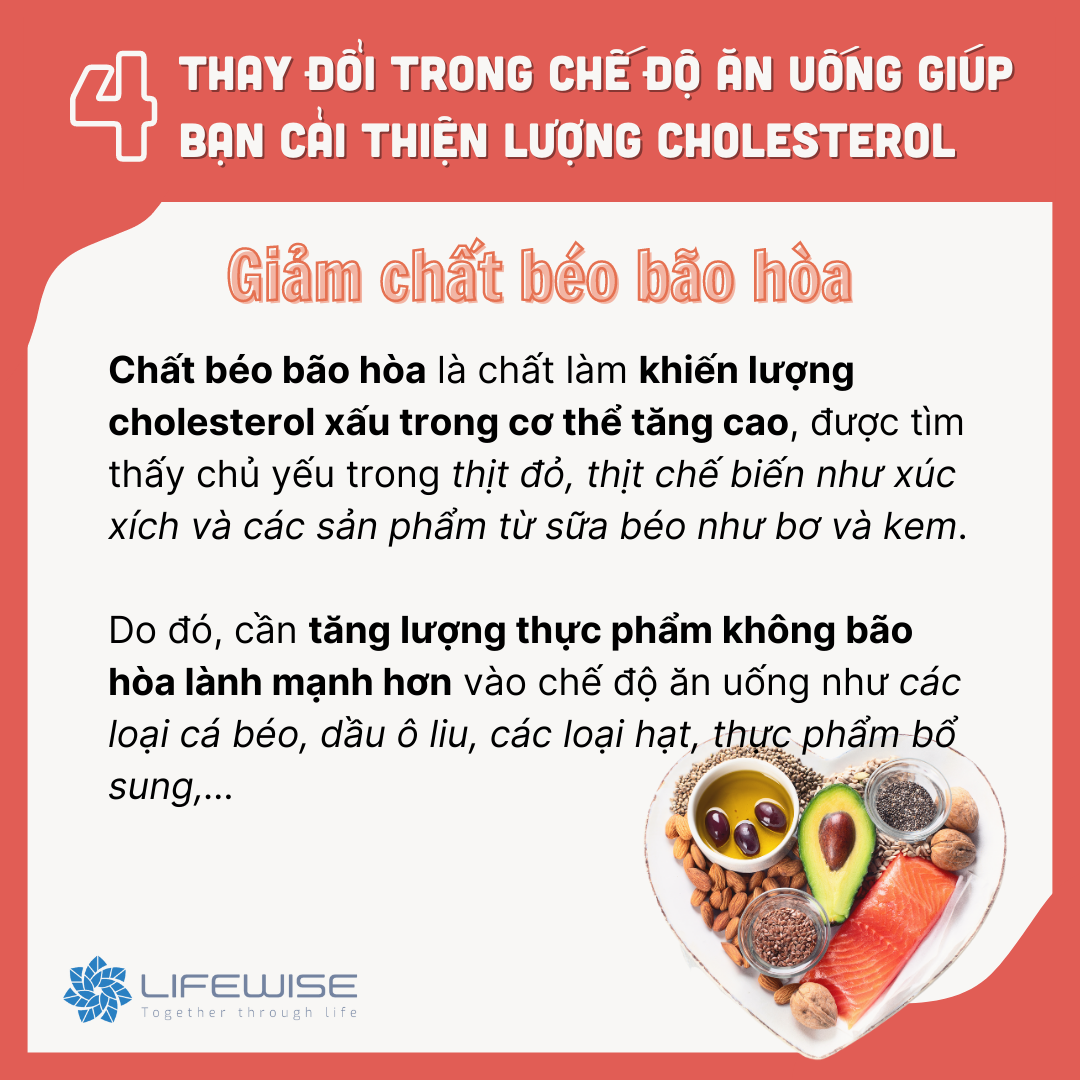
- Reduce saturated fat
Saturated fat increases bad cholesterol in the body and is found mainly in red meat, processed meat such as sausages, and high-fat dairy products such as butter and cream. Therefore, reduce saturated-fat intake, and increase healthier unsaturated foods in the diet such as fatty fish, olive oil, nuts and supplements…
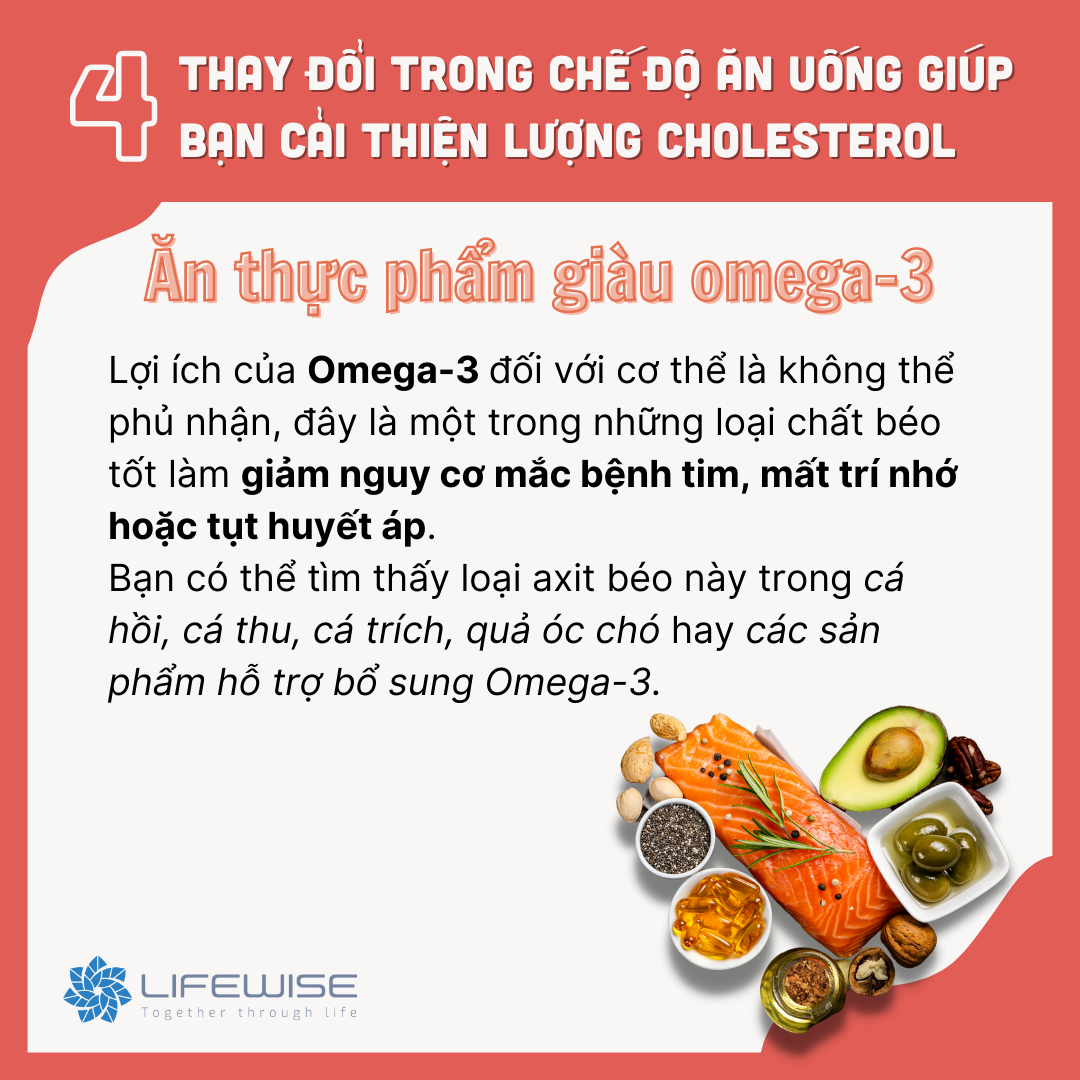
- Eat foods rich in omega-3 fatty acids
The benefits of Omega-3 for the body are undeniable. It is one of the good fats that reduce the risk of heart disease, memory loss or low blood pressure. You can find these fatty acids in salmon, mackerel, herring, walnuts or Omega-3 supplements.
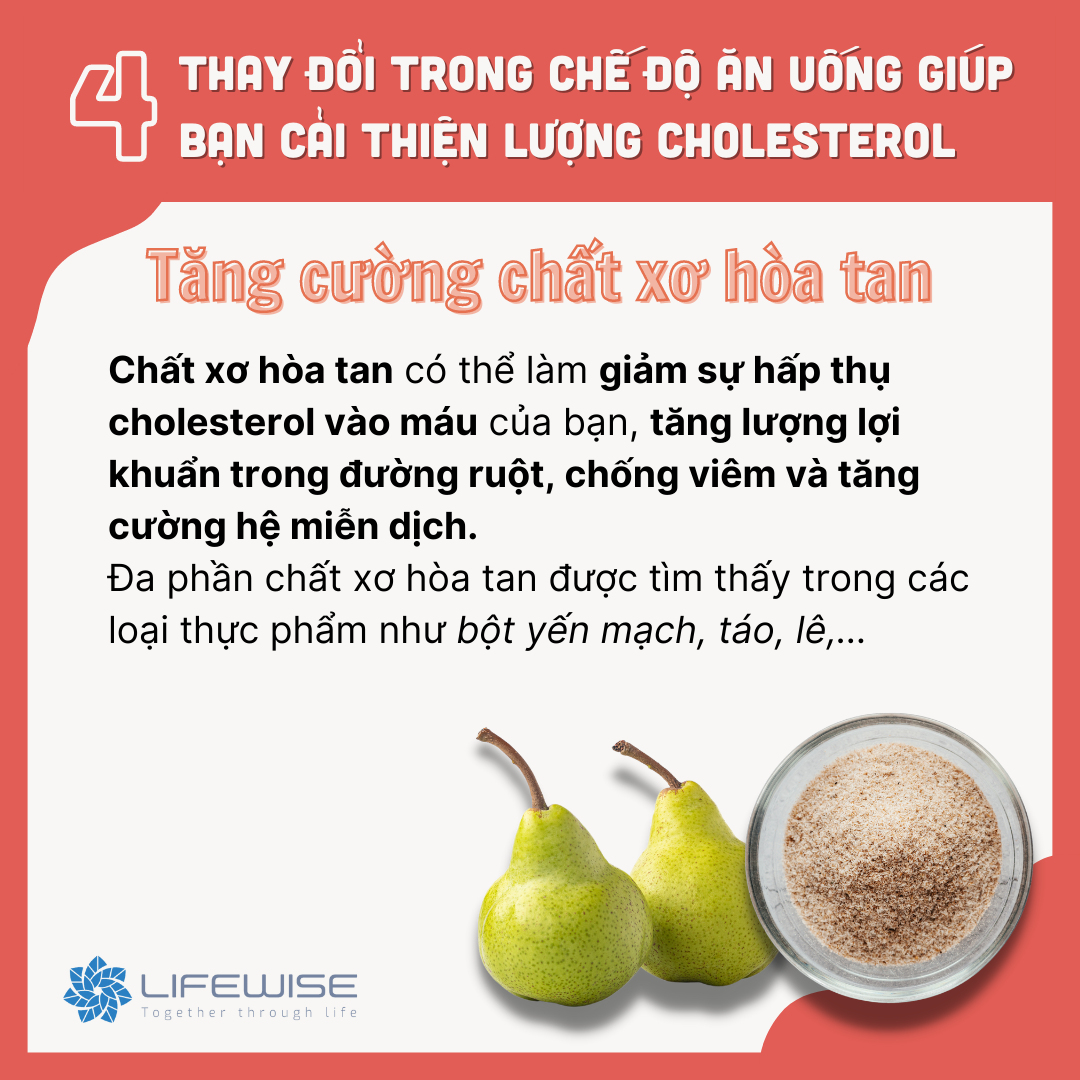
- Increase soluble fiber
Soluble fiber can reduce the absorption of cholesterol into Your bloodstream, increase beneficial gut bacteria, reduce inflammation and strengthen the immune system. Most soluble fiber is found in foods such as oatmeal, apples, pears,…
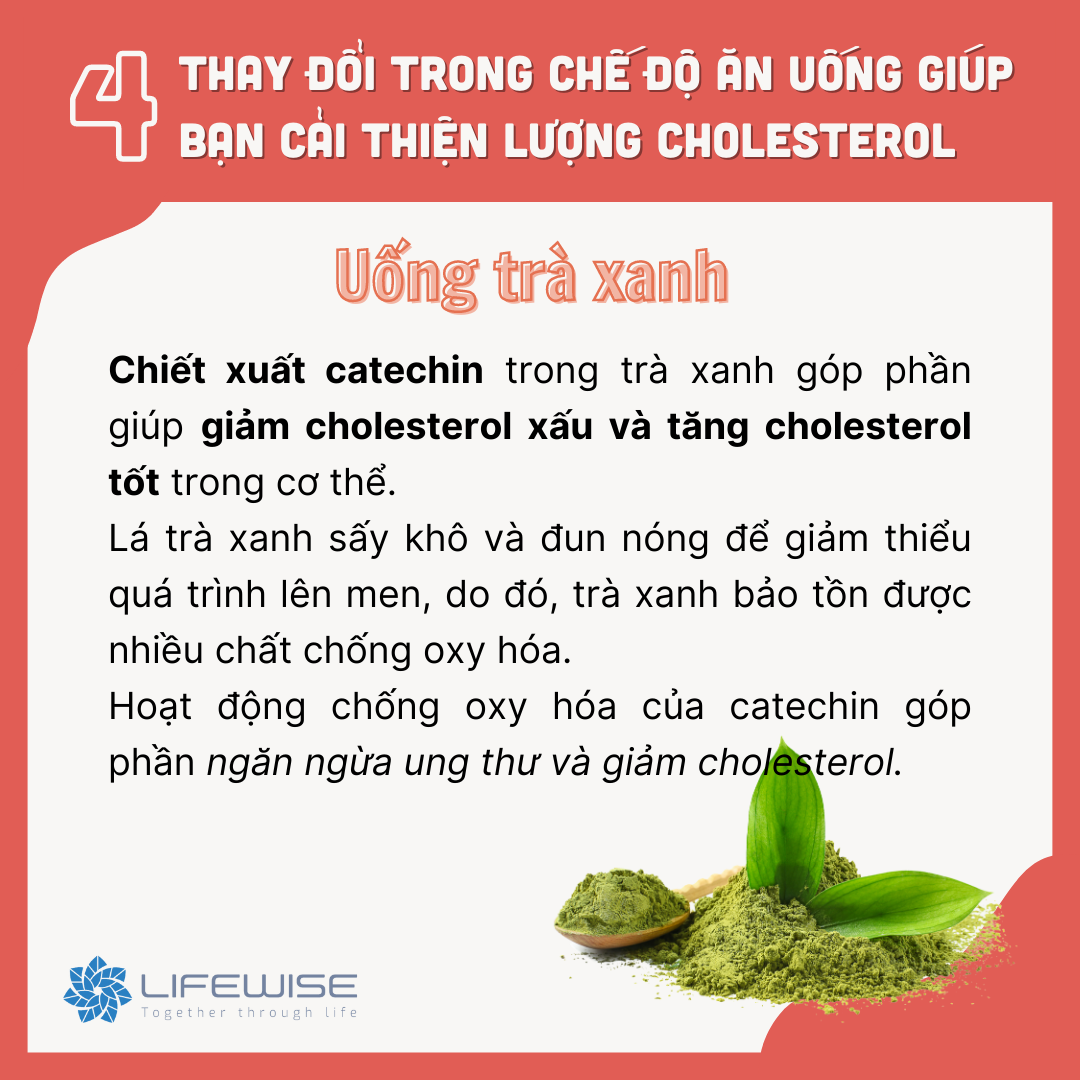
- Drink green tea:
Catechin extract in green tea helps reduce bad cholesterol and increase good cholesterol in the body. Green tea leaves are dried and heated to minimize fermentation, allowing green tea to retain more antioxidants. In addition, the antioxidant activity of catechin contributes to cancer prevention and cholesterol reductionl.