
More and more cases of stroke are being recorded in people under 40. It may not be too surprising to hear that someone’s grandfather or grandmother died of a stroke, but it is completely different when the same disease strikes someone your own age who has not yet turned 30.
For several months now, a story has been widely shared on the Internet about an extremely unfortunate case:
“During a picnic, a girl slipped and fell. People offered to call an ambulance, but she assured everyone that everything was fine and that she had simply stumbled because of her new shoes. Suddenly she shivered, looked a little pale and seemed to have difficulty speaking.
We helped her stand up and brushed the dirt off her clothes, made her comfortable and brought her a plate of food. For the rest of the day she remained cheerful and acted naturally, except that her smile looked slightly forced rather than open as usual. Later, the girl’s husband called everyone and said that his wife had been taken to the hospital. She died at 23:00. At the picnic she had suffered a stroke (acute cerebrovascular accident).
If we, her friends, had known what the signs of a stroke looked like, perhaps she could still be alive today!”
How to recognize a stroke
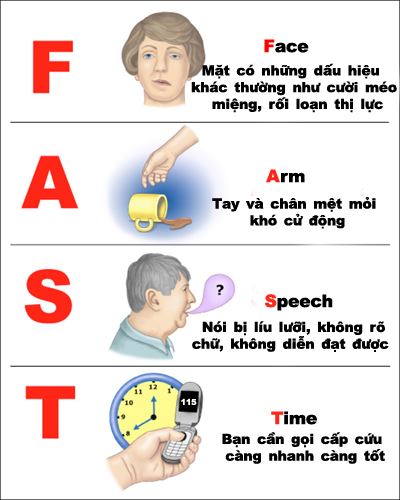
Ask the person to smile (they will not be able to do this evenly with both corners of the mouth; the smile will become asymmetrical).
Ask the person to say a simple sentence, such as “The weather is good today” (speech will be slowed, and the person may not remember what they need to say).
Ask the person to raise both arms (they may be unable to do so or may raise only one partially).
Ask the person to stick out their tongue (if the tongue is curved or deviates to one side, this is also a sign).
If someone has difficulty completing the requests above, call an ambulance immediately! Doctors assure that if they can reach a stroke victim within 