
Travel back in time with LifeWise and continue exploring the ancient heritage preserved in the land of the Pharaohs.
- Valley of the Kings: With 63 tombs of Pharaohs, queens and powerful nobles of ancient Egypt, this valley was elaborately and magnificently built into high rocky cliffs. Almost all the tombs appear to have been opened and robbed in the past, but the grandeur of the structures and the treasures that remain show the wealth and power of the rulers of that era.
- Abu Simbel Temple: This archaeological complex was built by Pharaoh Ramses II to worship 3 gods: Amun, Ra-Horakhty and Ptah, as well as himself. It is famous not only for the 4 divine statues standing 20m high at the front, but also for its precise construction techniques. Thanks to meticulous calculations in geometry and astronomy, on 22/2 and 22/10 each year, sunlight passes through the main entrance and illuminates the statues of Amun, Ramses II and Ra-Horakhty. But it never reaches the statue of Ptah because, according to ancient Egyptian belief, this god lives in darkness.
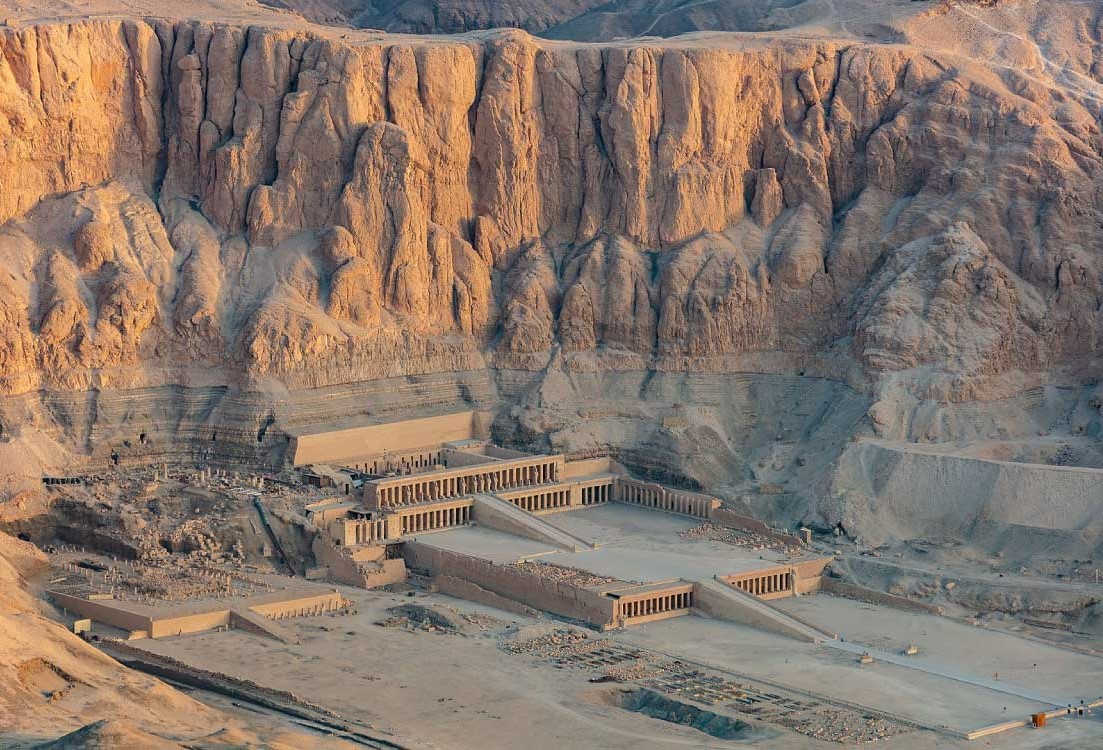
- Temple of Queen Hatshepsut: Built into limestone cliffs with a unique tiered architectural style, this temple honors Egypt’s first female Pharaoh – Hatshepsut. With its relatively symmetrical design, it is a typical example of the creativity and intelligence of the ancient Egyptians.
- Saqqara Necropolis: An ancient Egyptian cemetery containing many famous pyramids with distinctive architecture. Typical examples include the Red Pyramid, the Bent Pyramid and especially the Step Pyramid of Pharaoh Djoser, considered the first pyramid of ancient Egypt.
Egypt’s ancient heritage consists not only of magnificent architectural works, but also contains mysterious stories, unresolved questions and the wisdom of the ancient Egyptian people.